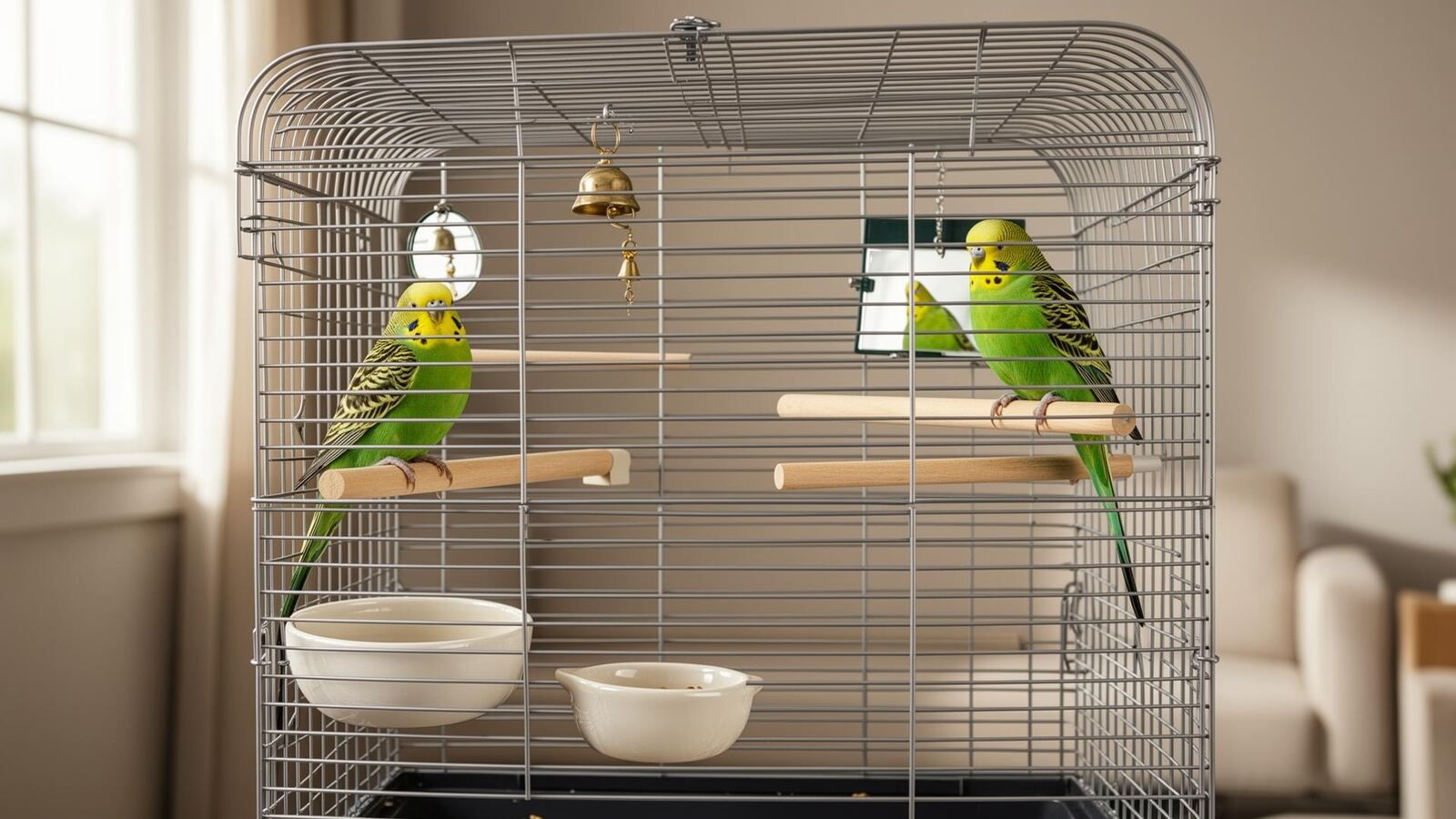
Parakeet Care
Parakeet Sleep Needs: Hours, Cage Cover & Night Frights Explained

Reviewed by Dr. Marian Hollis, DVM (ABVP-Certified Avian Practitioner) · Last reviewed May 2026
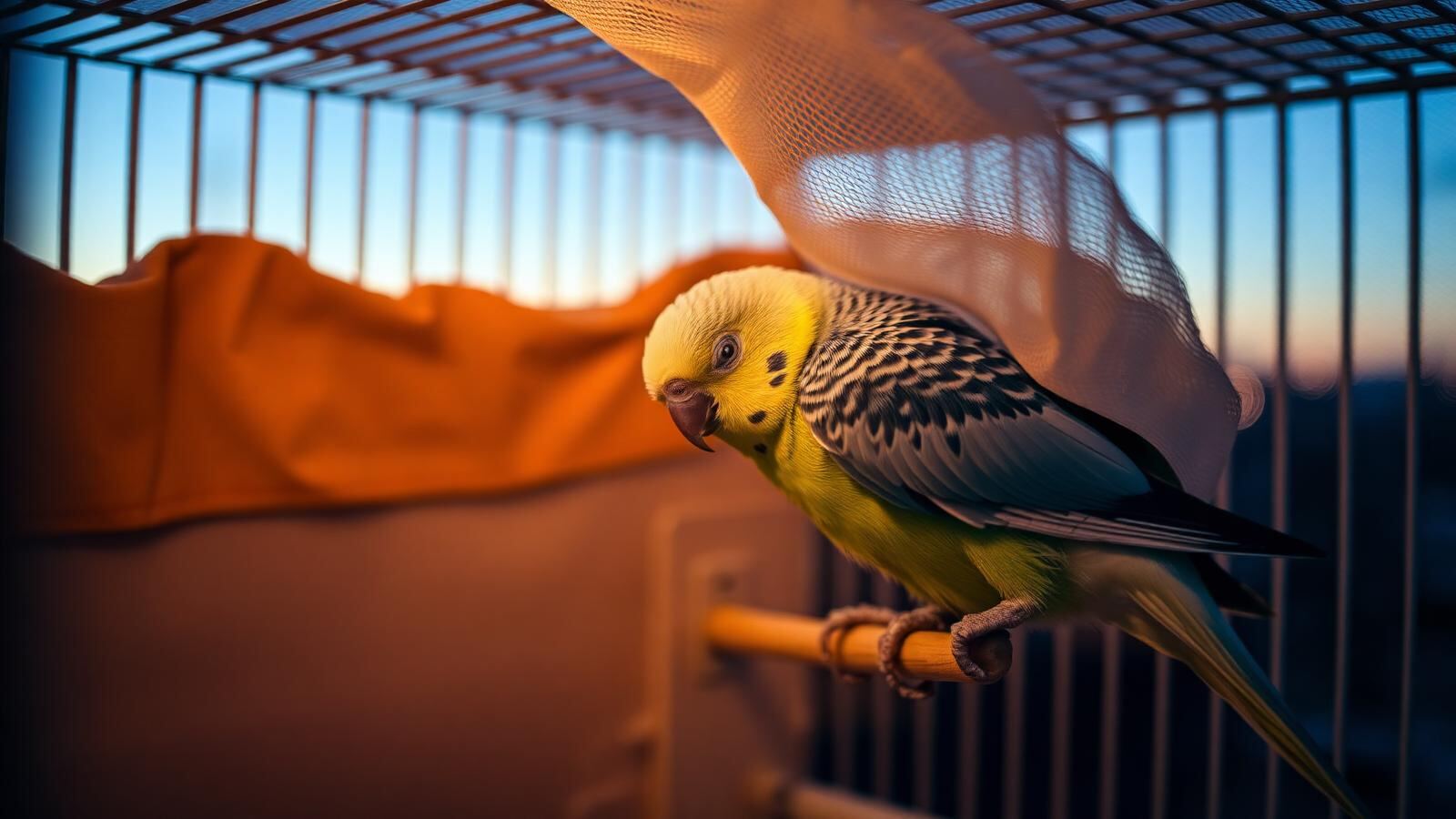
More behavior problems in parakeets come from bad sleep than from bad cages, bad food, or bad toys combined. Here is exactly how much sleep your bird needs, why darkness matters, and how to stop the panicked midnight crashes called night frights.
How much sleep do parakeets need?
Adult parakeets need 10–12 hours of uninterrupted, dark sleep every night. Younger birds and molting birds lean toward 12. Anything under 10 hours, repeated for weeks, shows up as nippiness, feather plucking, screaming, and chronic hormonal behavior.
Why darkness matters more than quiet
A parakeet's hormonal cycle is driven mostly by the length of daylight they perceive. Long, bright evenings tell their body it is breeding season — even in February. Short dark nights lead to year-round egg laying in females, aggression in males, and constant mate-bonding behavior toward toys and humans.
Where to put the cage at night
If your living room TV is on past 9pm, your bird is not really sleeping there. The two best options are: a separate sleep cage in a quiet bedroom, or moving the daytime cage into a darker room each evening. Even a hallway with the door closed works.
Cage cover: yes or no?
- Yes if your room cannot be made fully dark.
- Yes if streetlights or car headlights wash across the cage.
- Yes if you watch TV or use phone screens after the bird's bedtime.
- Optional if the room is naturally dark, quiet, and stays a stable temperature.
Choosing a safe cage cover
| Material | Use | Notes |
|---|---|---|
| Cotton flat sheet (white or pale) | Best all-rounder | Breathable, washable |
| Lightweight cotton blanket | Cool homes / winter | Avoid loose threads |
| Purpose-made bird cage cover | Convenient sizing | Check it is fully cotton, not polyester |
| Plastic / vinyl | Never use | Suffocation risk, traps fumes |
| Heavy fleece or wool | Avoid | Loose fibers can wrap around toes |
Whatever you use, leave a small gap (an inch or two) along one bottom edge so air circulates and your bird can sense the room.
Night frights: what they look like
A night fright is a sudden panic in total darkness — the bird thrashes blindly against bars, perches and toys. You will hear loud flapping and a heavy thump. By morning, you may find a broken blood feather, a chipped nail, or the bird sitting wide-eyed and stressed.
Why night frights happen
- Total darkness with a sudden trigger (car headlights, mouse, vibrating phone).
- Cage placed near a window with passing animals.
- Toys that swing or shadows that move in low light.
- A new room or recent change of cage location.
- Calcium deficiency, especially in females (talk to a vet).
How to prevent them
- Add a small night light (a 0.5–1 watt LED on a far wall) so the bird can orient if startled.
- Move toys that swing freely to the side, not over the night perch.
- Cover only three sides of the cage if frights are a recurring issue — leave the front semi-open.
- Keep nighttime temperature stable; sudden 5°C drops trigger thrashing.
- Move the cage at least 1 meter from any window after dusk.
If you wake up to a night fright in progress, switch on a soft light, speak calmly, and let your bird settle for 10–15 minutes before turning the light back off. Check for blood — broken feathers need pressure and possibly a vet.
A simple sleep schedule that works
| Time | Action |
|---|---|
| 7:00 — 7:30am | Uncover cage, open curtains, fresh water + food |
| 8:00pm | Last fresh food removed, lights start to dim |
| 9:00pm | Cage cover on, room lights off |
| 9:00pm — 7:00am | 10 hours of dark, quiet sleep |
Stick to within 30 minutes of these times every day, including weekends. Parakeets respond to consistency more than to any specific clock time.
Frequently Asked Questions
How many hours should a parakeet sleep?
Adult parakeets need 10–12 hours of dark, quiet sleep every night. Young birds and molting birds may need closer to 12. Less than 10 hours regularly leads to behavior and hormonal problems.
Should I cover my parakeet's cage at night?
Cover the cage if the room cannot be made fully dark, if streetlights wash across it, or if there is screen light or noise after bedtime. In a naturally dark, quiet room, covering is optional.
What is a night fright in budgies?
A night fright is a sudden panic in the dark where the bird thrashes against the cage. Triggers include passing headlights, sudden noises, and unstable temperatures. Add a small night light and stabilize the environment to prevent them.
Can my parakeet sleep in my bedroom?
Yes, as long as the room is dark by the bird's bedtime and stays roughly the same temperature overnight. Avoid bedrooms with TVs, scented candles, or essential-oil diffusers — all are harmful to birds.
Is it bad to wake a sleeping parakeet?
Occasional disturbances are fine. Repeated sleep interruption causes the same problems as never sleeping enough — irritability, plucking, and immune suppression. If you must enter the room at night, use a dim red light and stay quiet.
Sources & Further Reading
- Association of Avian Veterinarians — aav.org
- VCA Animal Hospitals — Bird Care Library
- Lafeber Vet — Companion Bird Nutrition

Medically reviewed
Dr. Marian Hollis, DVM — ABVP-Certified Avian Practitioner
Cascade Avian & Exotic Veterinary, Portland OR
Last reviewed May 2026 · About the author
Your turn
What did your parakeet teach you the hard way? Share your story by emailing hello@perchandplume.com — the best replies appear in our weekly letter.