Cage Setup & Toys
The Honest Beginner's Guide to Setting Up a Parakeet Cage

Reviewed by Dr. Marian Hollis, DVM (ABVP-Certified Avian Practitioner) · Last reviewed May 2026
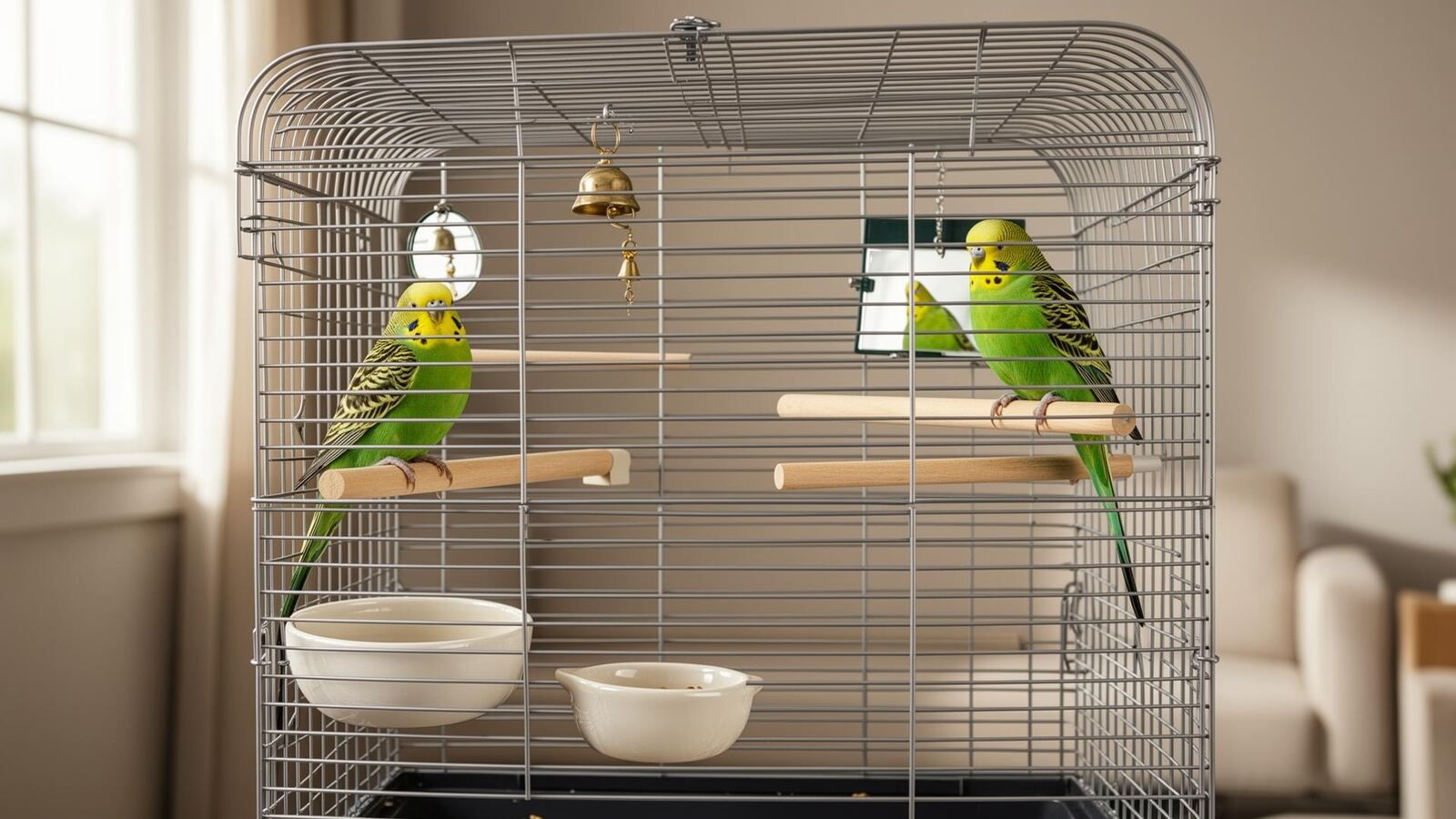
Most cage problems start on day one. Here's how I set up a cage that keeps a budgie healthy, busy, and calm — without overspending on things they'll never use.
I rescued my first budgie, Sky, eleven years ago. The pet store sold me a tall, narrow cage with two plastic perches and a mirror. Within a week he was plucking his chest. The cage wasn't cruel — it was just wrong for the way budgies actually live. If you're setting up your first parakeet cage, I want to save you that detour.
This guide is the setup I now recommend to every new keeper who emails me. It's based on what avian vets actually say, what my flock of four budgies actually uses, and what I wish someone had told me on day one.
Quick Summary: What You Actually Need
- A wide cage (wider than tall) with 1/2" bar spacing
- 3–4 natural-wood perches at varied diameters
- Two ceramic dishes (food, water) plus a separate veggie clip
- 4–6 rotated toys: foraging, shreddable, foot, and one mirror-free social toy
- A quiet, draft-free spot in a room your family actually uses
Cage Size: Wider Beats Taller, Every Time
Parakeets fly in short, level dashes — never straight up like a finch. A 30-inch-wide cage gives a single budgie room to actually flap between perches, which is the single biggest predictor of muscle health and behavioral calm. For two budgies, jump to 40 inches wide minimum.
The minimum dimensions I recommend
| Number of birds | Minimum size (W × D × H) | Better |
|---|---|---|
| 1 budgie | 30 × 18 × 18 in | 36 × 20 × 20 in |
| 2 budgies | 40 × 20 × 22 in | Flight cage 48 × 24 × 24 in |
| English parakeet | 36 × 20 × 22 in | 40 × 24 × 24 in |
Bar Spacing and Materials
Bars must be no wider than 1/2 inch apart. I have personally helped two birds whose owners bought "finch and small parrot" cages — both got their heads stuck. Powder-coated steel is fine; avoid galvanized bars (zinc poisoning) and any cage with chipped paint.
Perches: Throw Out the Plastic Dowels
Almost every cage ships with two identical plastic dowels. Throw them away. Same-diameter perches force a parakeet's foot into one fixed grip, leading to painful pressure sores called bumblefoot.
- Use natural wood — manzanita, java, or apple branches.
- Vary the diameter from about 3/8" to 7/8".
- Place a thicker perch low (sleep perch) and a thinner one high.
- Leave the middle of the cage open for short flights.
Food and Water Setup

Use ceramic, not plastic. Plastic scratches and harbors bacteria. I keep three stations: a small dish for pellets, a separate dish for water (clipped on the opposite side of the cage so droppings don't land in it), and a clip for fresh greens. This separation matters more than people think — wet food fouls fast and is the #1 cause of crop infections in pet stores.
Toys: Quality Over Quantity
Four to six toys, rotated weekly, beats a cage stuffed with twenty. Overcrowded cages stress birds and stop them from flying. Aim for one of each type:
- Foraging toy (hides millet or pellets)
- Shreddable toy (palm leaf, yucca, paper rope)
- Foot toy (small wooden block they can hold)
- Hanging chew (mineral or untreated wood)
Skip the mirror. A budgie that bonds with its reflection often refuses to bond with you, and males commonly regurgitate to mirrors until they get crop infections.
Where to Place the Cage
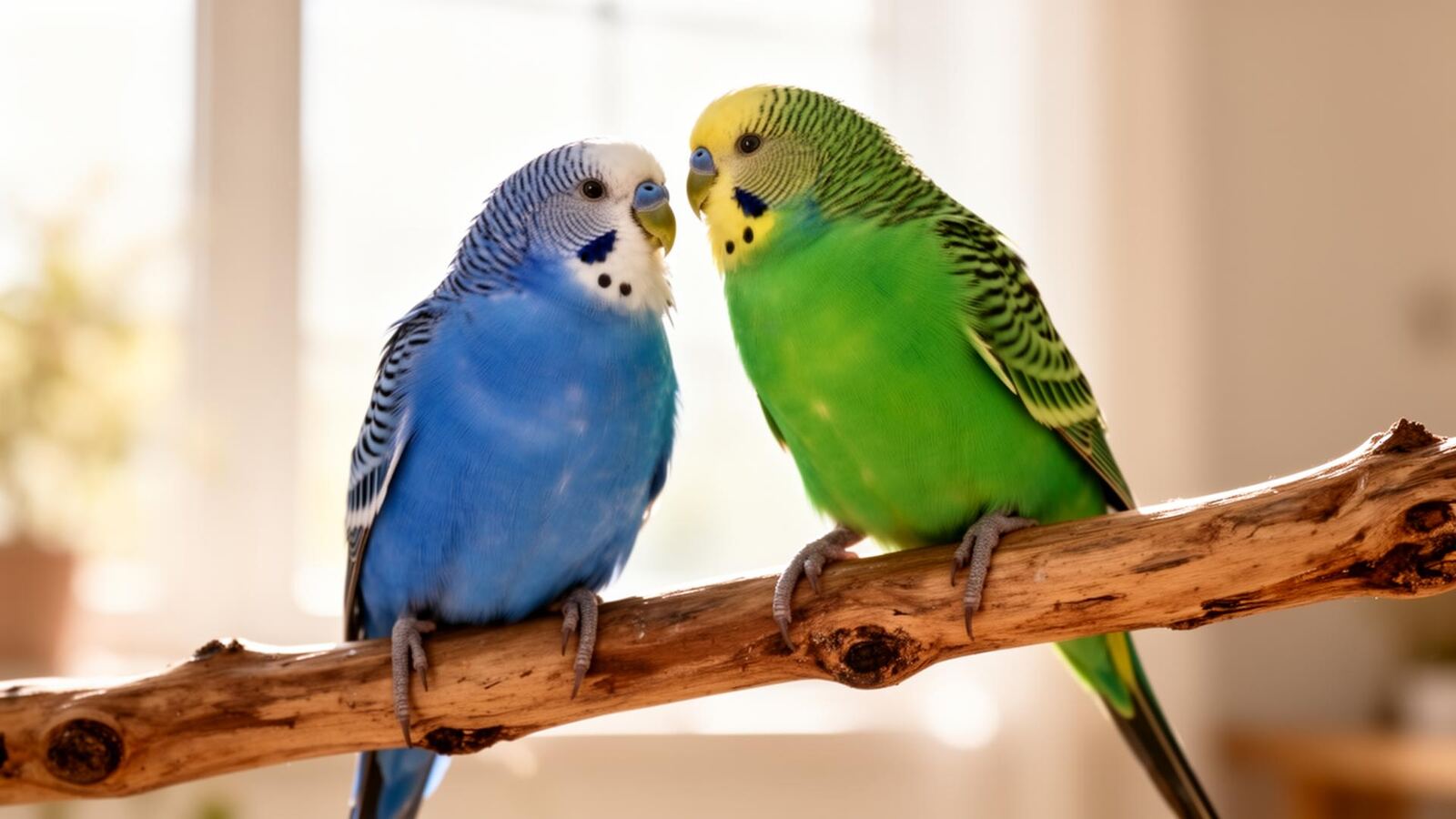
Place the cage at roughly chest height, against a solid wall, in a room your family uses daily. Avoid the kitchen (Teflon and gas fumes are deadly to birds), direct sun (overheating), and drafty hallways. A quiet corner of the living room is almost always the right answer.
Common Mistakes I See Every Week
- Buying a tall, narrow "parrot" cage because it looks impressive.
- Leaving sandpaper perch covers on — they cause foot sores within weeks.
- Putting the cage in a bedroom that gets cold at night (under 60°F / 15°C stresses budgies).
- Using scented candles or air fresheners in the same room — bird respiratory systems are extraordinarily sensitive.
- Adding a mirror as the "main" toy.
A Realistic Starter Budget
| Item | Realistic cost (USD) |
|---|---|
| Wide flight cage (used or new) | $80–180 |
| 3 natural wood perches | $15–25 |
| Ceramic dishes (×3) | $12–20 |
| Starter toy set (rotated) | $25–40 |
| Cage cover (sleep) | $15–25 |
Final Thoughts From Eleven Years In
A good cage is not the most expensive cage. It's a wide one, in a calm room, with safe perches, clean dishes, and a small thoughtful rotation of toys. Get those five things right and your parakeet will tell you within a week — through louder chatter, more flying, and less feather fussing.
Frequently Asked Questions
What is the minimum cage size for one parakeet?
For a single budgie, aim for at least 30" wide × 18" deep × 18" tall (76 × 46 × 46 cm). Wider is always better than taller — parakeets fly horizontally, not vertically.
What bar spacing is safe for parakeets?
Bar spacing should be no more than 1/2 inch (1.27 cm). Anything wider risks a budgie getting their head stuck.
Can I use sandpaper perches?
No. Sandpaper perches damage the soft skin on a parakeet's feet and can cause painful sores. Use natural wood perches of varied diameters instead.
Where should I place the cage?
A quiet corner of a frequently-used room, away from kitchens (fumes), windows in direct sun, and drafts. Birds feel safest with one solid wall behind them.
Sources & Further Reading
- Association of Avian Veterinarians — aav.org
- VCA Animal Hospitals — Bird Care Library
- Lafeber Vet — Companion Bird Nutrition

Medically reviewed
Dr. Marian Hollis, DVM — ABVP-Certified Avian Practitioner
Cascade Avian & Exotic Veterinary, Portland OR
Last reviewed May 2026 · About the author
Your turn
What did your parakeet teach you the hard way? Share your story by emailing hello@perchandplume.com — the best replies appear in our weekly letter.