Training & Behavior
How to Tame a Parakeet: A Calm, Step-by-Step Method That Works

Reviewed by Dr. Marian Hollis, DVM (ABVP-Certified Avian Practitioner) · Last reviewed May 2026
Forget grabbing, towel-wrapping, or "alpha" advice. Here is the calm, two-week taming routine I use with every rescue that walks through my door.
Most taming advice on the internet is, frankly, bad. "Grab them in a towel." "Show them who's boss." "Clip their wings so they have to trust you." None of that produces a bonded bird. It produces a bird that has given up.
What follows is the method I use with every new budgie, including frightened rescues. It takes around two weeks of short, calm sessions. The end result is a parakeet who actively chooses your company — not one who tolerates being handled.
Quick Summary: The 14-Day Method
- Days 1–3: Do nothing. Let the bird settle.
- Days 4–6: Sit beside the cage and read aloud quietly.
- Days 7–9: Offer millet through the bars.
- Days 10–12: Open the door, hand inside resting still.
- Days 13–14: Introduce the "step up" cue with millet on a finger.
Days 1–3: The Settling Window
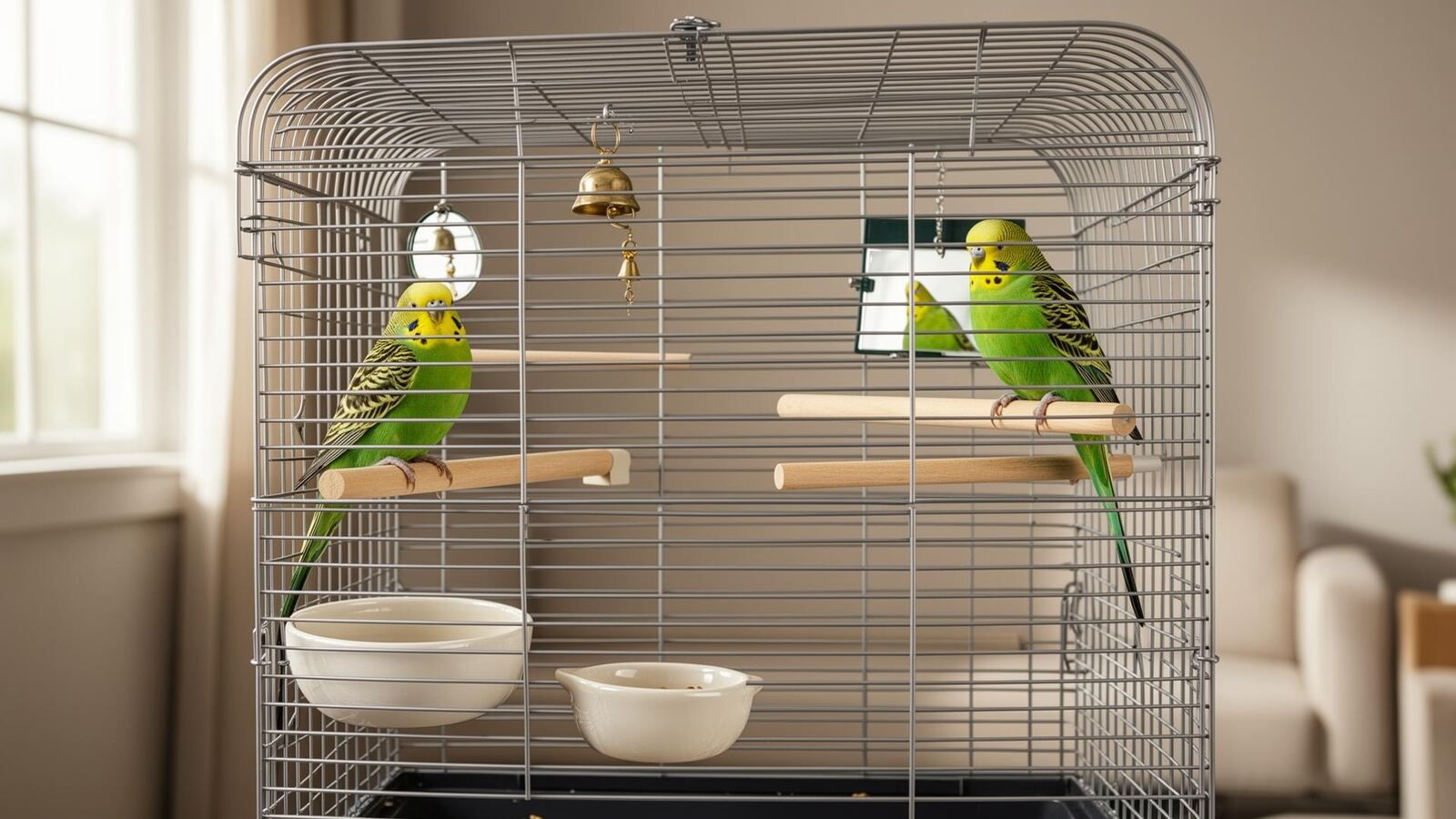
Bring your new parakeet home and put the cage somewhere quiet but not isolated. For three full days, do nothing beyond changing food and water. No staring, no fingers in the cage, no introductions to the dog. Birds are prey animals — they need to confirm the new environment isn't going to eat them before they can begin to trust you.
Days 4–6: Become Part of the Furniture
Sit on the floor about three feet from the cage and read a book out loud in a calm, low voice. Twenty minutes, twice a day. Don't look directly at the bird (direct eye contact reads as predator behavior). You're teaching the bird that your presence is boring and safe — the highest compliment a prey animal can pay you.
Days 7–9: First Food Reward
Once your parakeet eats normally and chirps in your presence, offer a sprig of millet through the bars. Hold it still. Don't push it toward them. Let curiosity pull them. The first nibble is a milestone — say nothing, don't move.

Days 10–12: Open Door, Still Hand
Open the cage door. Rest your hand on the open door, palm up, completely still, for 10 minutes. Don't reach. Most budgies will inspect your hand within 2–3 sessions. If yours flies away, freeze. Movement equals predator.
Days 13–14: The First Step Up
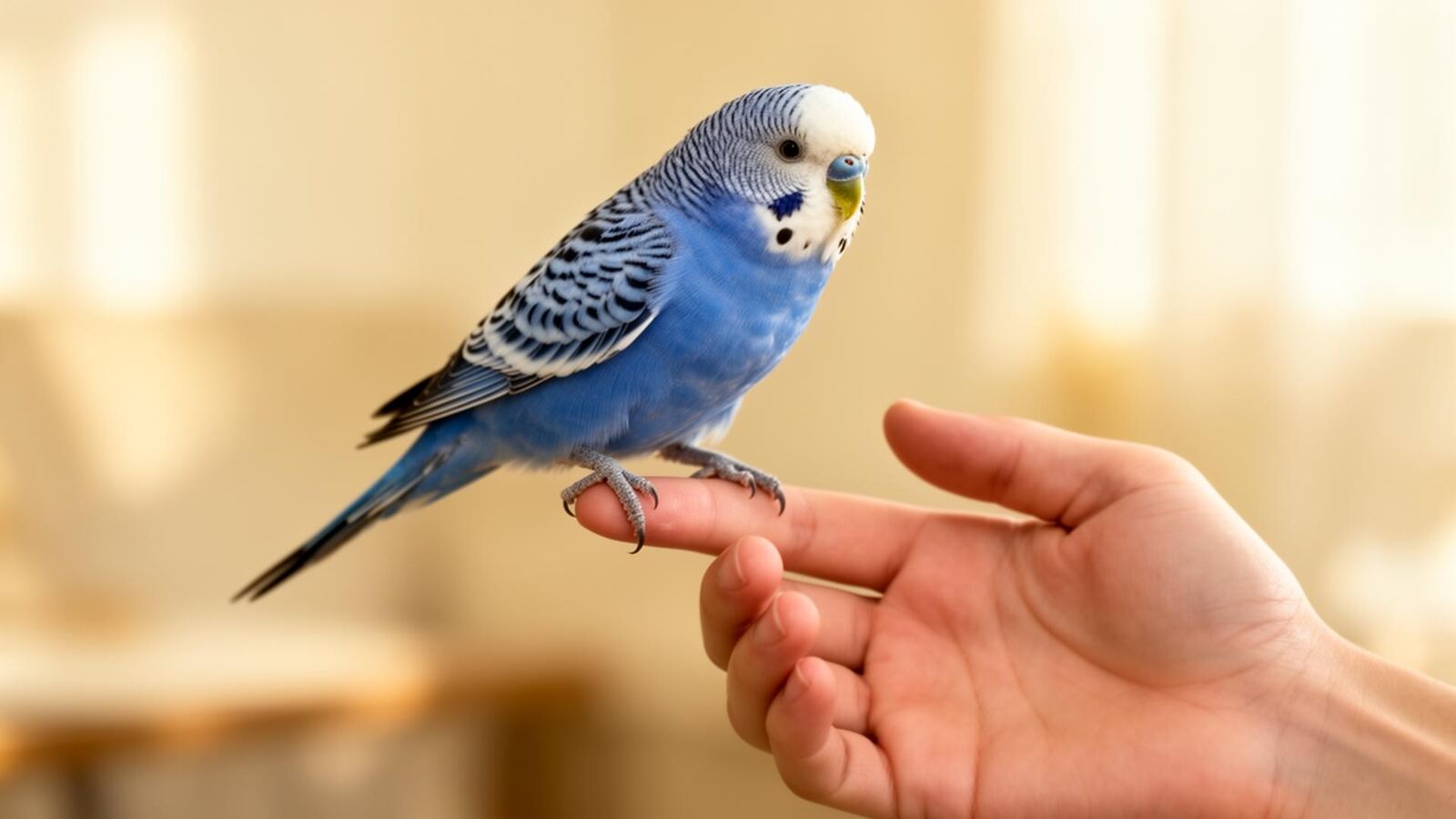
- Hold a small piece of millet in your fingers, just above the bird's chest height.
- Gently say "step up" once, in the same calm tone every time.
- Press your index finger gently against the bird's lower belly, just above the legs.
- When they step up to reach the millet, let them eat it on your finger.
- End the session there. Always end on a win.
Things You Must Never Do
- Never grab a parakeet with your hand (it destroys weeks of trust in one second).
- Never towel-wrap to "force" handling — that is a vet emergency tool, not a training tool.
- Never chase a flying bird around the room.
- Never punish biting. Biting is feedback, not aggression.
- Never train when you're tired or frustrated. Birds read your energy instantly.
What to Do When You Get Bitten
Stay still. Don't yelp, don't pull away. Most parakeet "bites" are warnings — pressure without breaking skin. The bird is telling you they're not ready for what you just asked. Reset, slow down, offer millet, and try a smaller request.
A bitten finger is information. A grabbed bird is a betrayal.
Signs Your Parakeet Trusts You
- Eats in front of you with no hesitation
- Preens or naps while you are in the room
- Approaches the cage door when you walk over
- Chirps or sings back when you talk
- Steps up without bait
When Progress Stalls
Stalling is normal — usually around day 8 or day 11. Drop back one stage for two days, then try again. Hormonal seasons (spring) and molts (twice a year) make budgies cranky and less interested in training; pause and resume in a calmer week.
A Final Word From Eleven Years of Birds
Every truly bonded budgie I've ever met was tamed by someone who moved more slowly than felt necessary. The keepers who rush always end up with skittish birds. The ones who treat each session like a quiet little tea ceremony end up with parakeets who fly across the room to land on their shoulder. There is no shortcut, but there is a shortcut to ruining it.
Frequently Asked Questions
How long does it take to tame a parakeet?
Most parakeets step up onto a finger within 10–21 days of consistent, gentle daily sessions. Older or rescued birds may take 2–3 months.
Should I clip my parakeet's wings to tame it?
No. Modern positive-reinforcement training does not require clipping, and a flighted bird that chooses to come to you is far more bonded than one that has no choice.
Why does my parakeet bite when I put my hand in the cage?
The cage is their safe zone. Train outside the cage, or teach "step up" through the open door — never reach in to grab.
Can older parakeets be tamed?
Yes. I have tamed 6-year-old rescues. It takes patience and a strict no-grab rule, but trust is rebuildable at any age.
Sources & Further Reading
- Association of Avian Veterinarians — aav.org
- VCA Animal Hospitals — Bird Care Library
- Lafeber Vet — Companion Bird Nutrition

Medically reviewed
Dr. Marian Hollis, DVM — ABVP-Certified Avian Practitioner
Cascade Avian & Exotic Veterinary, Portland OR
Last reviewed May 2026 · About the author
Your turn
What did your parakeet teach you the hard way? Share your story by emailing hello@perchandplume.com — the best replies appear in our weekly letter.