Parakeet Care
How to Take Care of a Parakeet: The Complete Daily Care Routine (2026)
Reviewed by Dr. Marian Hollis, DVM (ABVP-Certified Avian Practitioner) · Last reviewed May 2026
Caring for a parakeet is mostly about rhythm — small, predictable habits done well every day. After 11 years of keeping budgies, here is the exact routine I use, and the one a new owner can copy from day one.
What a parakeet actually needs every day
A parakeet is a small flock animal with a fast metabolism. That means three things you cannot skip: clean water, fresh food, and predictable social time. Everything else in this guide builds on those three pillars.
The non-negotiables
- Fresh water, changed at least once a day (twice in summer).
- A measured portion of seed or pellet, plus a small fresh-food serving.
- 10–12 hours of quiet, dark sleep.
- At least 1 hour of safe out-of-cage time.
- A quick visual health check — eyes, vent, droppings, posture.
My morning routine (10–15 minutes)
Mornings set the tone. Birds are at their most alert just after the cage cover comes off, and that is the easiest time to spot something off.
- Open the curtains before uncovering — let the room brighten first.
- Greet your bird by name in a calm voice. No sudden movements.
- Empty and rinse the water dish, then refill with fresh, room-temperature water.
- Remove yesterday's fresh food and any wet seed.
- Offer a small bowl of chopped vegetables (a teaspoon per bird is plenty).
- Look at the cage paper: count the droppings, check color and consistency.
- Listen for normal chatter. Silence in the morning is a yellow flag.
Midday check (2 minutes)
If you are home, glance at the cage at lunch. Top up water if it has been splashed out, replace any soiled paper liner directly under the perch, and remove any uneaten fresh food before it ferments — especially in warm rooms.
Evening routine (20–30 minutes)
Evenings are for connection. This is when most parakeets are calm enough to bond, and when you should give them dedicated out-of-cage time before sleep.
- Bird-proof the room: close windows, switch off ceiling fans, cover mirrors.
- Open the cage door and let your bird come out on their own terms.
- Spend 30–60 minutes within the same room — birds do not need handling, just company.
- Refresh the seed cup, removing empty husks (a full-looking cup may be 80% empty hulls).
- Wipe the perches and bars near the food station with a damp cloth.
- Dim the lights gradually and cover the cage at the same time every night.
Weekly tasks (the 20-minute Sunday reset)
| Task | Why it matters | How long |
|---|---|---|
| Deep-clean food and water dishes with hot soapy water | Prevents bacterial biofilm | 5 min |
| Replace cage liner fully | Reduces ammonia and mite risk | 3 min |
| Wipe bars, perches and toys with a bird-safe cleaner (white vinegar + water 1:1) | Removes droppings and dander | 8 min |
| Rotate two or three toys | Prevents boredom and feather plucking | 2 min |
| Weigh your bird on a kitchen scale (in grams) | First sign of illness is weight loss | 2 min |
Food: the simple weekly plan
A balanced parakeet diet is roughly 60–70% pellets or high-quality seed mix, 20–25% fresh vegetables, 5–10% sprouted seeds or cooked grains, and only the occasional fruit. Avoid avocado, onion, garlic, chocolate, and anything salty.
If your parakeet only eats seeds, do not switch the bowl overnight. Mix 10% pellets in for a week, then 25%, then 50%. Sudden diet changes cause stress and weight loss.
Sleep, light and the dark cycle
Parakeets need 10–12 hours of uninterrupted darkness. A bird that sleeps with the TV on for weeks becomes hormonal, irritable, and prone to feather damage. Use a light, breathable cover — never plastic — and keep the cage in a quiet corner away from the kitchen at night.
Out-of-cage time: how much is enough?
Aim for at least 1 hour outside the cage every day, broken into two sessions if you can. Birds left caged 24/7 develop muscle weakness, behavioral problems and obesity. Even 20 supervised minutes on a play stand is better than nothing.
Health checks you should never skip
- Eyes clear and round, no crusting around the cere.
- Droppings: white urates, dark green or brown solid, clear urine.
- Posture: upright on the perch, weight on both feet.
- Breathing: silent, no tail bob.
- Weight: consistent within ±2 grams for an adult budgie.
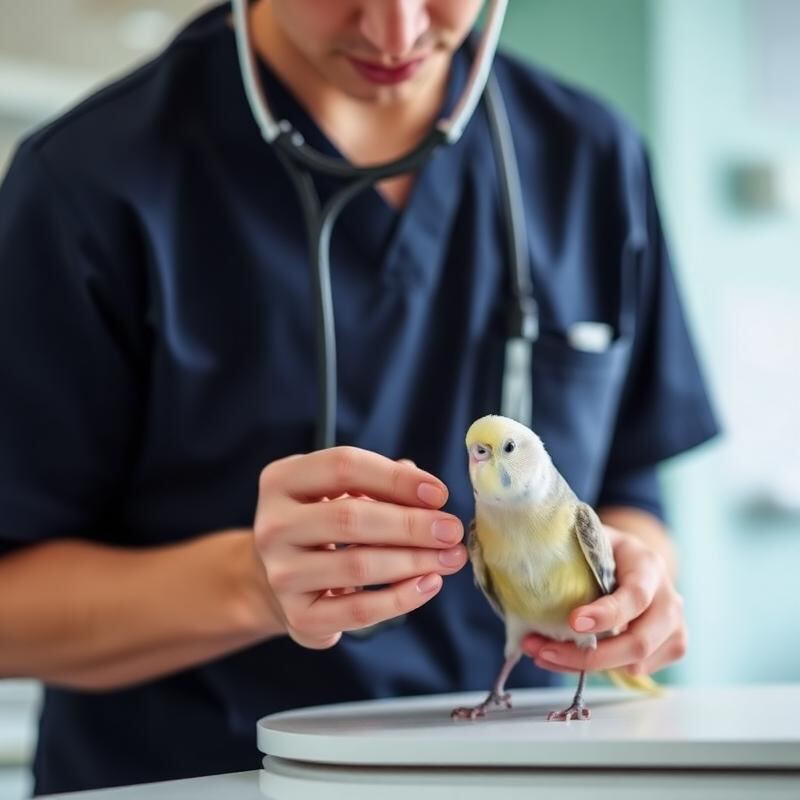
Any change that lasts more than 24 hours deserves a call to an avian vet. Parakeets hide illness extremely well — by the time they look obviously sick, they are usually critical.
First-month mistakes to avoid
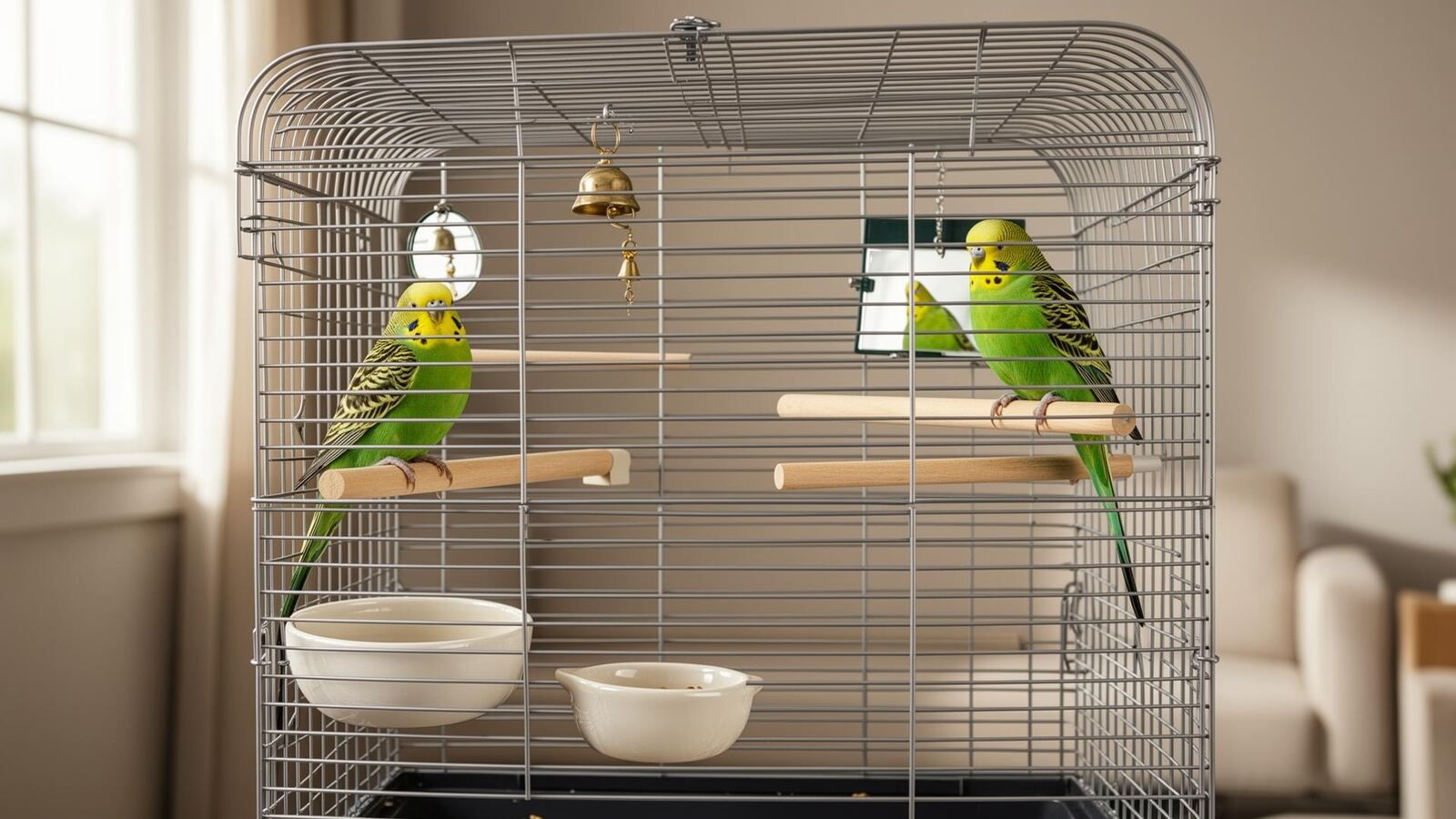
- Buying a cage too small (minimum 30 inches wide for one budgie).
- Using sandpaper perch covers — they damage feet, not nails.
- Putting the cage in the kitchen (Teflon fumes are lethal).
- Free-flying before your bird is tame and reliably step-up trained.
- Skipping the nightly cover, then wondering why the bird is grumpy.
Frequently Asked Questions
How much time per day does a parakeet need?
Plan on 30–45 minutes of hands-on care plus at least 1 hour of out-of-cage social time. The hands-on portion includes feeding, water changes, cleaning, and a daily health check.
Can I leave my parakeet alone for a weekend?
One night is fine with extra food and water. Two nights is the absolute maximum, and only with a daily visit from someone who can refresh water and check for illness. Beyond that, use a sitter — parakeets dehydrate fast.
Do parakeets need to be covered at night?
Most do. A breathable cover signals bedtime, blocks drafts, and prevents night frights from sudden lights or movement. Skip it only if your bird is clearly distressed by the cover after a one-week trial.
How often should I clean the cage?
Spot-clean the liner daily, wash food and water dishes daily, and do a full deep-clean of bars, perches and toys once a week. Fully replace perches and natural-wood toys every few months.
What is the single biggest mistake new parakeet owners make?
Underestimating sleep. A sleep-deprived parakeet becomes nippy, plucks feathers, and can become chronically hormonal. Twelve hours of dark, quiet sleep solves more behavior problems than any toy or treat.
Sources & Further Reading
- Association of Avian Veterinarians — aav.org
- VCA Animal Hospitals — Bird Care Library
- Lafeber Vet — Companion Bird Nutrition
Medically reviewed
Dr. Marian Hollis, DVM — ABVP-Certified Avian Practitioner
Cascade Avian & Exotic Veterinary, Portland OR
Last reviewed May 2026 · About the author
Your turn
What did your parakeet teach you the hard way? Share your story by emailing hello@perchandplume.com — the best replies appear in our weekly letter.