Parakeet Care
Do Parakeets Need a Friend? The Honest One-vs-Two Budgie Decision

Reviewed by Dr. Marian Hollis, DVM (ABVP-Certified Avian Practitioner) · Last reviewed May 2026
Pet stores will sell you one budgie. Avian vets usually recommend two. Here's the honest answer based on the bird, not the marketing — and exactly how to introduce a second one if you choose to.
This is the question I get asked more than any other: "Should I get one parakeet or two?" The pet store says one. Your aunt who had a budgie in 1995 says one. The internet forums shout "NEVER ONE." The honest answer lives somewhere in the middle and depends entirely on you.
Here is the version of this answer I'd give a friend over coffee, after eleven years and four budgies — two raised alone, two raised paired.
The Short Answer
- Parakeets are flock animals. Their default need is companionship.
- A single budgie can thrive — but only with significant daily human interaction (3+ hours of shared room time).
- If you work outside the home, travel often, or have a packed schedule, get two.
- Two birds is roughly 1.3x the work, not 2x — and far less than half the guilt.
What a Single Parakeet Actually Needs
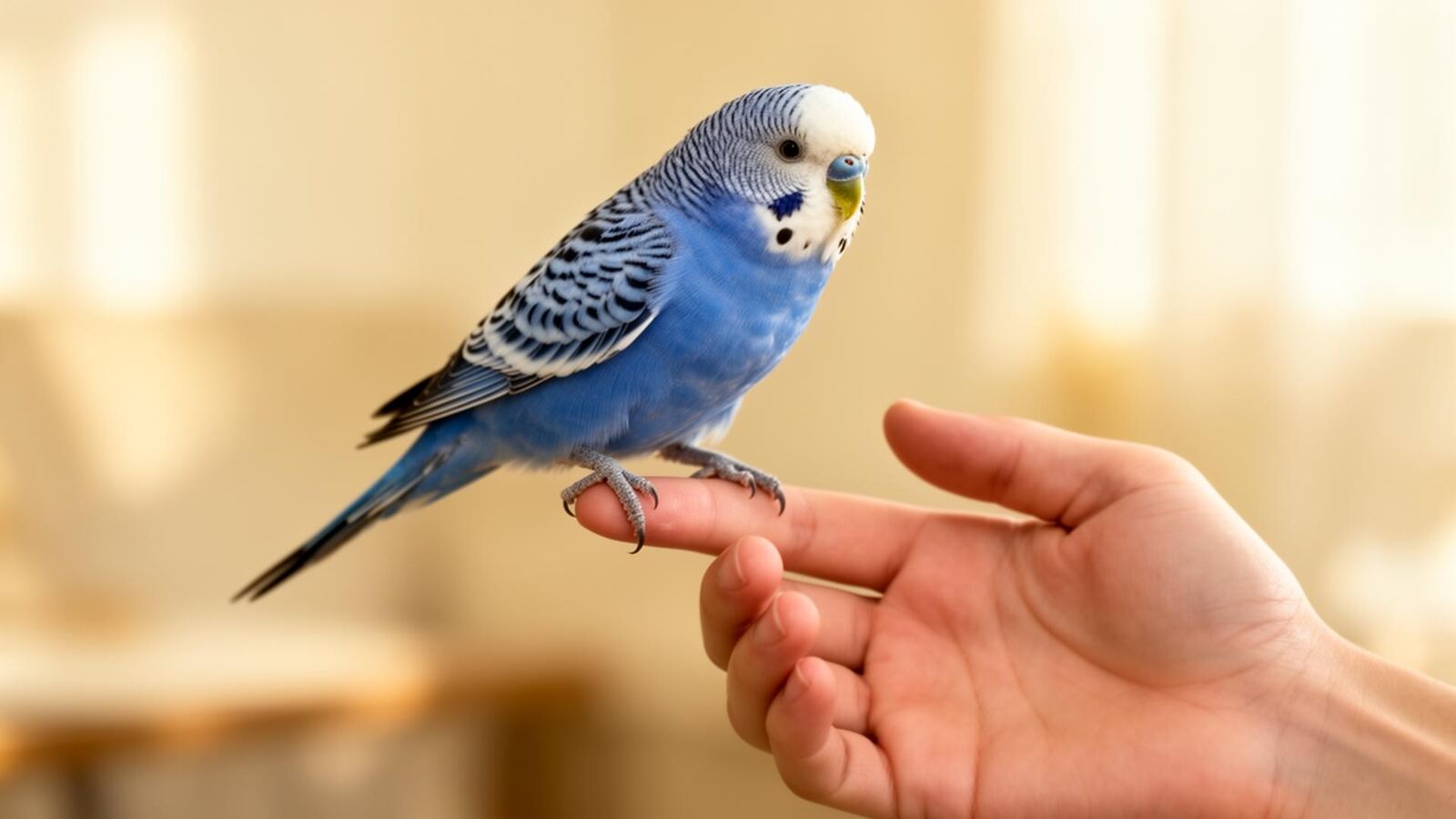
A solo budgie is not necessarily a sad budgie — but you become the flock. That means real time, not just "in the same house." Budgies in the wild are never alone. They preen together, eat together, fly together, and call to one another constantly. A single bird needs you to do those things.
Honest minimums for a solo budgie
- 3+ hours per day in the same room with you, talking and acknowledging them
- At least 1 hour of out-of-cage flight time
- Daily training and food enrichment
- Never being left alone overnight if you travel
If you can't honestly commit to that on a Tuesday in February when you're tired, get two.
What Two Parakeets Actually Look Like
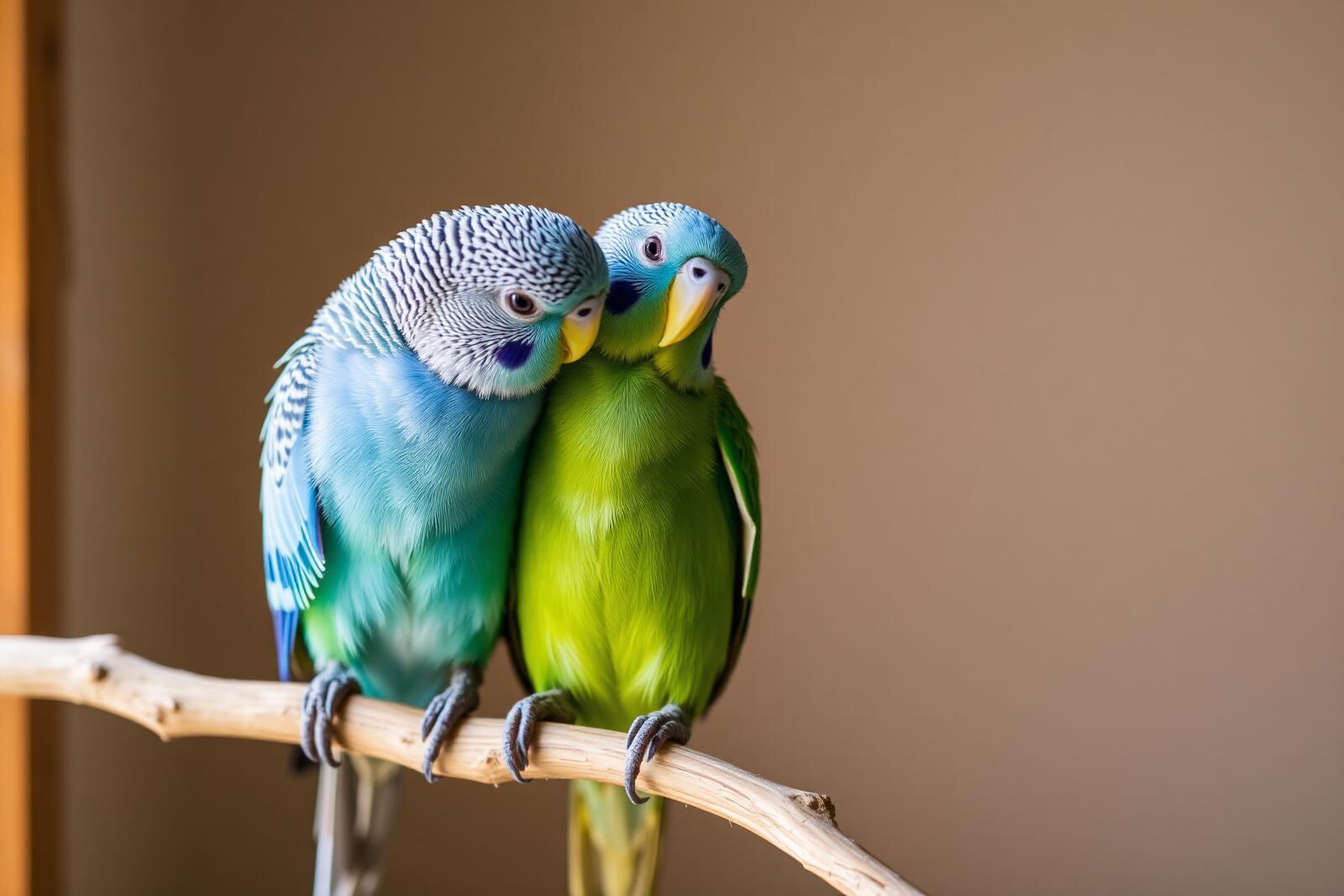
A bonded pair of budgies will preen each other, share food, sleep shoulder to shoulder, and chatter constantly. They are visibly more relaxed than solo birds. The trade-off: you are no longer the most important being in their world. With deliberate early training, however, they will still step up, accept handling, and choose to come to you.
Will Two Budgies Still Bond With Me?
Yes — if you do the work in the right order. The mistake people make is buying two budgies at once and housing them together immediately. The birds bond exclusively with each other and ignore the human.
- Acquire one budgie first. Spend 4–8 weeks taming and bonding (see our 14-day taming guide).
- Bring home the second budgie and quarantine in a separate cage in a different room for 30 days (vet recommendation).
- After quarantine, place the cages near each other for one week.
- Introduce in a neutral space — not either cage — for short supervised sessions.
- Continue individual training time with each bird, not just paired time.
Pairing Combinations
| Combination | Difficulty | Notes |
|---|---|---|
| Two males | Easiest | Minimal hormonal conflict, often bond fast |
| Two females | Hardest | Territorial — provide doubled resources, watch carefully |
| Male + female | Medium | Will breed unless nest sites are removed and daylight controlled |
| Adult + young bird | Medium | Older bird may bully — supervise meal times closely |
Cage and Cost Reality
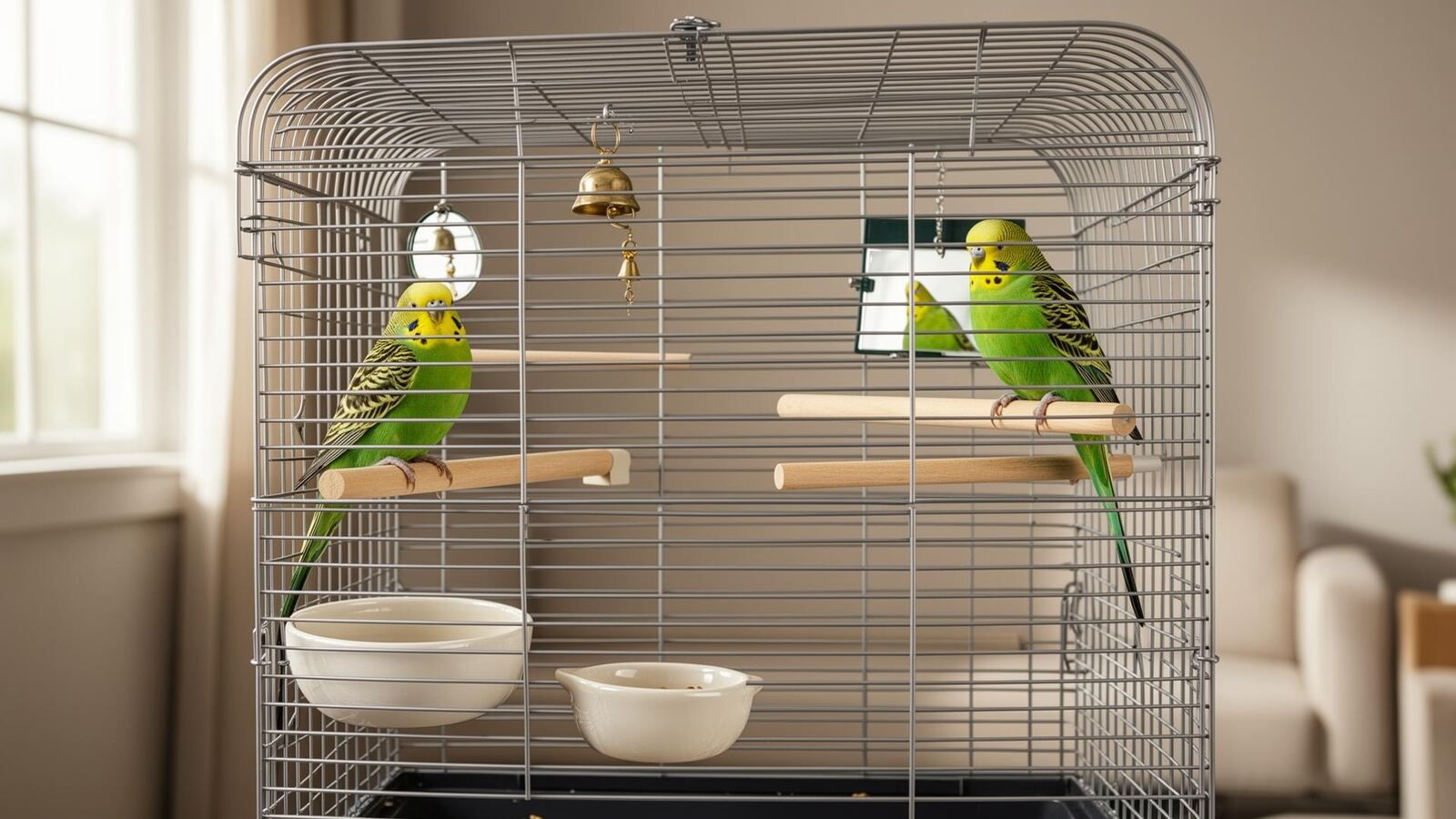
Two budgies need a wider cage (minimum 40 inches wide), two food dishes, two water dishes, and toys spaced so neither bird controls a resource. Vet costs roughly double; food costs only mildly increase. Cleaning is about 1.3x the work, not 2x. Companionship benefit, in my experience, is closer to 5x.
When NOT to Get a Second Bird
- You haven't fully tamed your first one yet — finish that first.
- Your current cage is too small to upgrade.
- You can't quarantine for 30 days in a separate room.
- Your first bird is elderly or chronically ill.
- You haven't found an avian vet yet.
Signs Your Solo Budgie Is Lonely
- Constant flock-calling when you leave the room
- Excessive bonding to a mirror or toy (regurgitation, mating displays)
- Feather plucking or self-mutilation
- Lethargy that resolves only when you enter the room
- Over-attachment that becomes screaming when you're out of sight
If you see two or more of these consistently, your bird is asking for a flock — and you should answer.
What I'd Do Today, Knowing What I Know
If I were starting over and worked a normal full-time job, I would get two budgies — same sex, ideally hand-raised, from a small breeder rather than a chain pet store. I'd spend the first month taming them individually, then let them be a real flock together, while keeping daily one-on-one training going forever. That setup, in my experience, produces the happiest birds and the easiest keeper life.
One bird needs you to be a flock. Two birds let you be a friend. Both can work — just be honest about which one you can actually be.
Frequently Asked Questions
Is it cruel to keep just one parakeet?
Not necessarily — a single budgie with several hours of daily human interaction can thrive. But a single budgie kept in a cage 12+ hours a day with no companion is genuinely lonely. Match the setup to your honest schedule.
Will two budgies still bond with me?
Yes, if you start training individually before fully bonding them. Two budgies that are best friends with each other and ignore you is the result of skipping early human handling, not an inevitability.
Should I get two males, two females, or a pair?
Two males is the easiest combination — minimal hormonal conflict and they bond easily. Two females can fight territorially. A male/female pair will breed unless carefully managed.
Do I need a bigger cage for two parakeets?
Yes. Minimum 40 inches wide for two budgies, with double the perches, food dishes, and toys to prevent resource guarding.
Sources & Further Reading
- Association of Avian Veterinarians — aav.org
- VCA Animal Hospitals — Bird Care Library
- Lafeber Vet — Companion Bird Nutrition

Medically reviewed
Dr. Marian Hollis, DVM — ABVP-Certified Avian Practitioner
Cascade Avian & Exotic Veterinary, Portland OR
Last reviewed May 2026 · About the author
Your turn
What did your parakeet teach you the hard way? Share your story by emailing hello@perchandplume.com — the best replies appear in our weekly letter.