Cage Setup & Toys
Best Parakeet Toys: A 7-Day Enrichment Plan That Prevents Boredom

Reviewed by Dr. Marian Hollis, DVM (ABVP-Certified Avian Practitioner) · Last reviewed May 2026
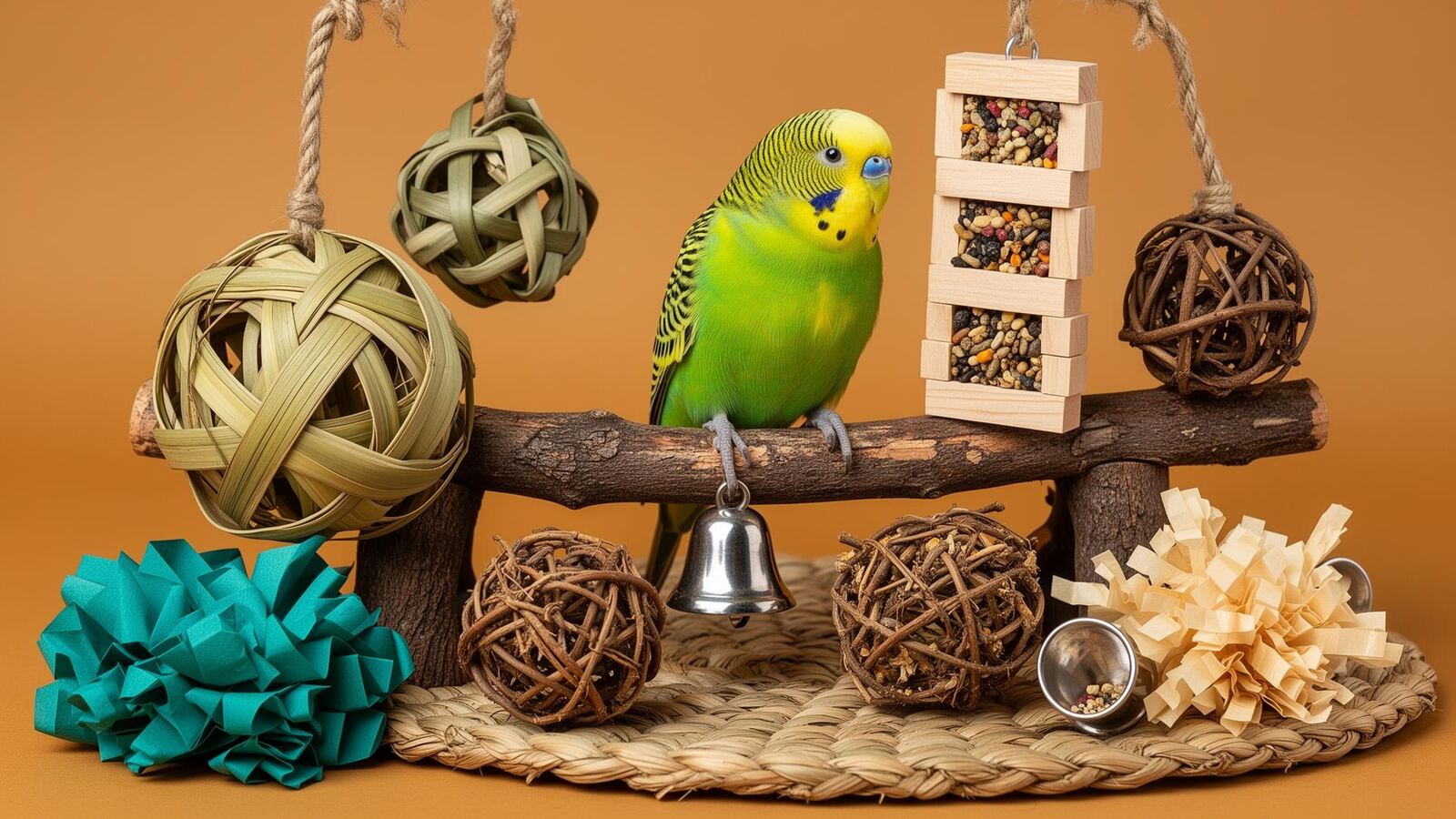
The best parakeet toy is not the most colorful one—it is the one that creates a safe job. This behavior-led guide helps you choose shredding, foraging, climbing and problem-solving toys, then rotate them without frightening a cautious bird.
Stop shopping for objects—shop for behaviors
Wild budgies spend the day traveling, searching, manipulating plants and choosing. Good enrichment creates a safe action: peel this, find that, climb here, solve one step, then rest. Build a toolkit across behavior categories instead of buying ten versions of hanging beads.
| Toy job | Good materials | Success looks like |
|---|---|---|
| Shred | Palm, paper, sola | Tearing and returning |
| Chew | Balsa, yucca | Visible beak marks |
| Forage | Paper cups, vine balls | Searching before eating |
| Move | Swings, ladders | Balancing and route changes |
| Solve | Simple lids and flaps | Focused attempts without frustration |
The 7-day rotation
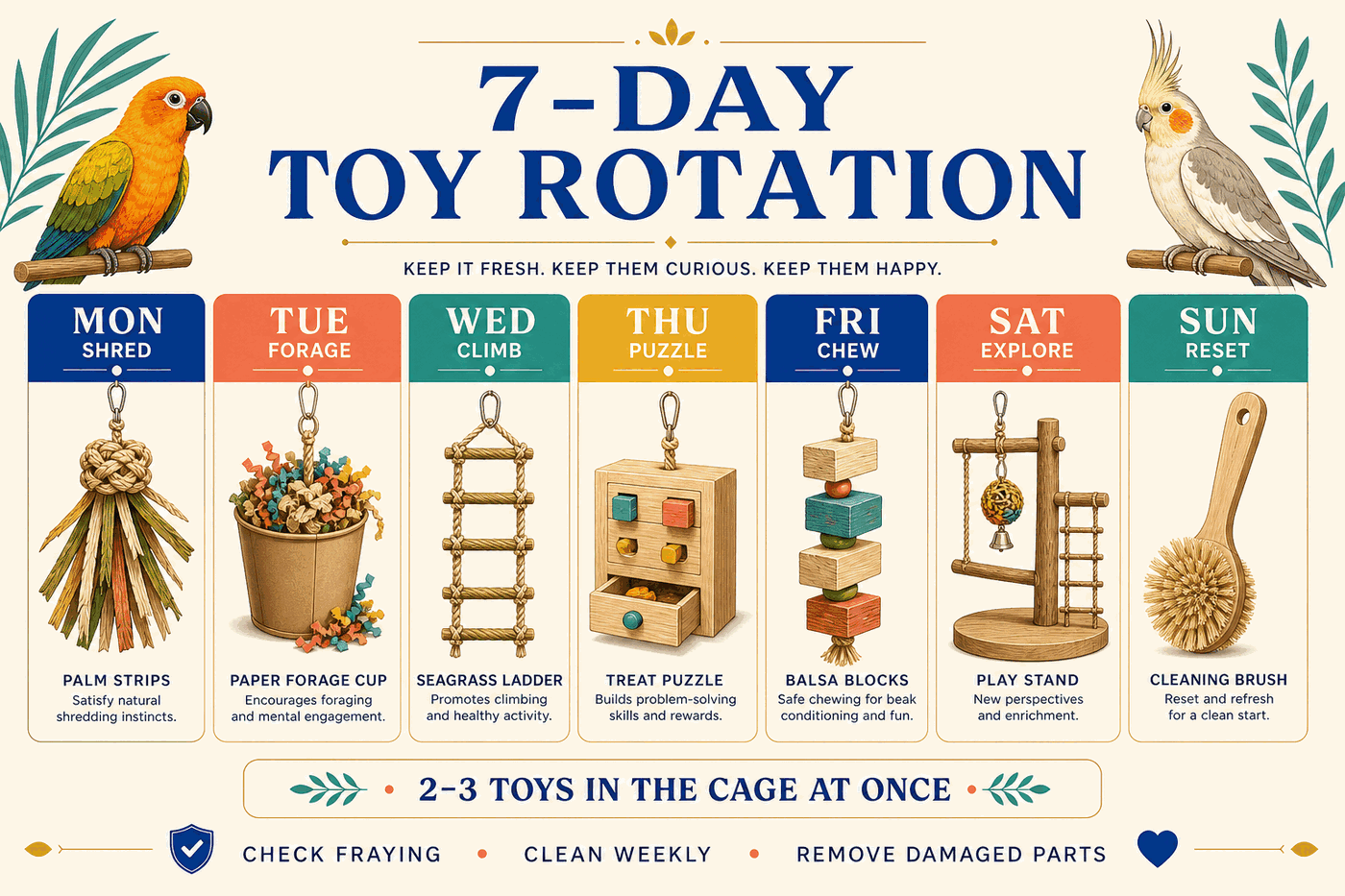
Keep one trusted favorite, offer one featured activity and remove only dirty or damaged items. Confident birds may investigate immediately; cautious birds may need days. Curiosity cannot be rushed.
Monday — Shred
Clip untreated palm strips or plain paper to the cage side away from food and flight. Tuck one visible seed near an edge. Remove long string-like pieces.
Tuesday — Forage
Place part of the usual food ration in a paper cup with crinkle paper. Begin fully visible; later fold one edge to encourage searching without frustration.
Wednesday — Climb
Introduce a seagrass ladder or stable branch route leading somewhere useful. Check openings for head and toe traps and remove frayed fibers.
Thursday — Puzzle
Use an open-front beginner puzzle with the reward visible. One movement—lifting a flap or nudging a lid—is enough. Simplify if the bird leaves.
Friday — Chew
Offer budgie-sized balsa, sola or yucca. Discard pieces with sharp splinters, exposed wire or contamination.
Saturday — Explore
With the room secured, invite the bird to a tabletop play stand. Supervise, remove other pets and let the bird choose whether to join.
Sunday — Reset
Wash according to material, dry fully and inspect under bright light. Retire damaged toys instead of using household glue or tape.
The seven-point toy safety test
- Pull every connector; prefer correctly sized closed stainless quick links.
- Search for long fibers and loose cotton.
- Check bell clappers and discard rust.
- Inspect loops and gaps for entrapment.
- Reject odors, flaking finishes and mystery paint.
- Find sharp wire exposed by chewing.
- Discard porous toys contaminated by spoiled food.
| Material | Verdict | Reason |
|---|---|---|
| Palm / sola / balsa | Excellent when bird-safe | Light and destructible |
| Plain paper / card | Useful supervised | Easy to forage; replace wet |
| Stainless steel | Preferred hardware | Durable and lower corrosion risk |
| Cotton rope | Extreme caution | Frays can entangle or be swallowed |
| Mystery metal | Avoid | Potential zinc or lead |
| Unknown leather | Avoid | Treatments may be unsafe |
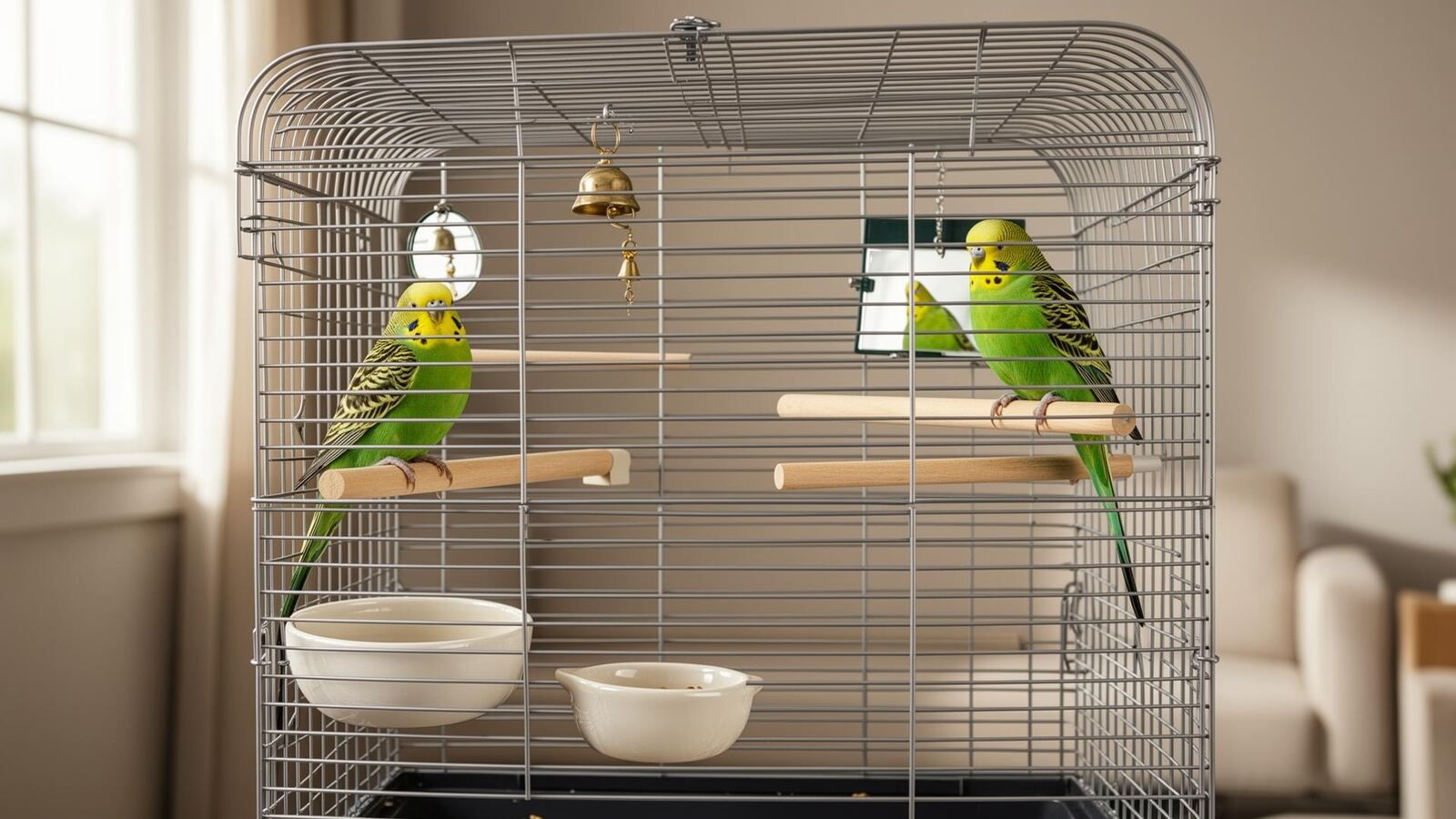
| Mirror | Usually skip | Can cause fixation |
Five simple DIY ideas
1. Paper parcel
Wrap one familiar food piece in plain paper, twist lightly and leave it visible. Never use tape, staples or metallic wrap.
2. Forage tray
Fill a shallow clean dish with large paper strips, vine balls and part of the food ration. Discard damp contents.
3. Greens clip
Secure washed leafy greens with a bird-safe stainless clip near a perch. Remove leftovers within hours.
4. Cardboard edge
Weave a short clean strip of plain food-grade cardboard through bars from outside. No adhesive, coating or staples.
5. Visible-cup search
Offer three tiny paper cups with a reward visible in one. As skill grows, partially cover it.
Introduce toys without fear
- Show the object across the room.
- Move closer only while the bird stays relaxed.
- Handle calmly and place treats nearby.
- Attach outside the cage first if needed.
- Move inside away from sleep initially.
- Reward looking and approaching; never force contact.
A toy enriches only when the bird can approach, investigate, leave and return.
Read the response
| Signal | Meaning | Next move |
|---|---|---|
| Looks, stretches, approaches | Healthy caution | Wait and reward choice |
| Tries, leaves, returns | Good challenge | Keep difficulty |
| Paces or calls sharply | Frustration or fear | Simplify or remove |
| Guards or regurgitates | Fixation | Remove reflective object |
| Never leaves one perch | Layout or health concern | Review and seek vet advice if persistent |
The balanced-cage formula
- One trusted favorite.
- One destructible item.
- One simple forage using regular food.
- One movement option if space allows.
- One open center corridor—more valuable than one extra toy.
Observe which job your budgie chooses, not which toy looked best in the package. Those choices become a personal enrichment profile that helps you buy less, rotate better and keep the cage genuinely interesting.
Frequently Asked Questions
What toys are best for parakeets?
Offer something to shred, something to chew, a simple forage challenge and a movement item such as a swing or ladder.
How many toys should a budgie have?
Two to four well-spaced toys suit many cages. Never block the flight path, bowls or sleep perch.
How often should I rotate toys?
Inspect daily and exchange one familiar toy every 5–7 days. Avoid replacing everything at once.
Are mirrors safe toys?
Mirrors are not a good default. Some birds fixate, regurgitate or guard them. Prefer foraging and shredding.
Can I make DIY toys?
Yes, with plain paper, unprinted card, bird-safe balsa, palm and stainless hardware. Avoid staples, glue exposure, loops and loose fibers.
Why is my budgie afraid of a new toy?
Novel objects can seem threatening. Begin several feet away, move closer gradually and reward voluntary approaches.
Sources & Further Reading
- Association of Avian Veterinarians — aav.org
- VCA Animal Hospitals — Bird Care Library
- Lafeber Vet — Companion Bird Nutrition
Medically reviewed
Dr. Marian Hollis, DVM — ABVP-Certified Avian Practitioner
Cascade Avian & Exotic Veterinary, Portland OR
Last reviewed May 2026 · About the author
Your turn
What did your parakeet teach you the hard way? Share your story by emailing hello@perchandplume.com — the best replies appear in our weekly letter.